Free beaches and rock pools in Brisbane
Brisbane's beaches are a surprise to anyone expecting a typical Australian surf town. The city itself has no ocean beach, so it built its own. Streets Beach at South Bank is a free swimming lagoon with sand, palms and a view of the skyline. Settlement Cove Lagoon at Redcliffe and Orion Lagoon at Springfield Central work the same way, offering calm water that suits toddlers and confident children alike. Around Moreton Bay, the natural beaches at Wellington Point, Clontarf, Margate, Scarborough and Suttons Beach give shallow sandy water, with tides that move a long way. At low tide, the shallows can stretch out, and at high tide the beach can shrink to a thin strip, so check the listing and the tide. Amity Point has a swimming enclosure on Minjerribah, and Point Lookout has ocean beaches with real waves, which need more care. As always, swim between the red and yellow flags where patrols operate, and no flags means no lifeguards. In warmer months, bluebottles and other jellyfish can appear in the bay, so heed signs and consider the enclosures and lagoons for small children. Sun is strong, so aim for early starts, long-sleeved rash vests and a good hat. Storms can build quickly in summer afternoons, and the water is the first place to leave when thunder starts.
Our picks
-
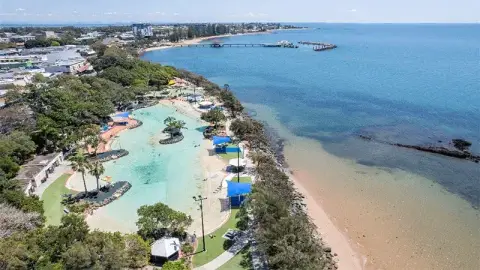 Settlement Cove Lagoon Redcliffe
Settlement Cove Lagoon is a free, tropical-themed public swimming lagoon run by City of Moreton Bay on the Redcliffe Peninsula.
★ 4.5 (2,630)
-
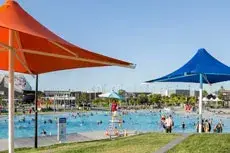 Orion Lagoon Springfield Central
Orion Lagoon is an Ipswich City Council public swimming lagoon in the Robelle Domain parklands at Springfield Central, about 30 minutes' drive from Brisbane's CBD.
★ 4.5 (2,620)
-
 Macleay Island swimming enclosure (Pat's Park) Macleay Island
Free Redland City Council swimming enclosure on Macleay Island, at Pat's Park, Beelong Street.
Not patrolled · ★ 4.6 (144)
-
 Redland Bay swimming enclosure (Ruster's Reserve) Redland Bay
Redland Bay's council swimming enclosure is at Ruster's Reserve on The Esplanade, corner of Moores Road - the only mainland swimming enclosure listed by Redland City…
Not patrolled · ★ 4.4 (62)
-
 Karragarra Island swimming enclosure (Karragarra Island Foreshore Park) Karragarra Island
Free Redland City Council swimming enclosure on Karragarra Island, at Karragarra Island Foreshore Park, The Esplanade.
-
 Queens Beach Scarborough
Queens Beach in Scarborough runs beside Queens Beach Park on the Redcliffe foreshore.
Not patrolled · ★ 4.3 (37)
Before you go
Best for which ages
Lagoons and swimming enclosures suit babies, toddlers and nervous swimmers, because the water is calm and shallow. Bay beaches suit primary-age children who can swim confidently with an adult. Ocean beaches at Point Lookout suit strong swimmers and teenagers who understand flags and rips.
What to bring
A wide-brimmed hat, rash vests and strong sunscreen, plus extra water, as the humidity drains small children quickly. Bring a pop-up shade, a towel and a change of clothes. Water shoes help on shell grit and mud flats, and a bucket keeps little ones busy.
Parking and facilities
South Bank has a lot of paid parking nearby, but trains, buses and ferries reach it easily. Bay beaches usually have car parks, though they fill on hot weekends. Toilets and showers are common at the lagoons. The listing says what is on site.
Best time of year
Late spring, summer and early autumn are the main swimming months. Summer brings heat and afternoon storms, so go early. Winter is dry and clear, and good for beach walks and shell hunts, but the water is cool and jellyfish are less common.
Prams and accessibility
Lagoons and parklands generally have paved paths that suit prams and wheelchairs. Bay beaches often have boardwalks or grassy picnic areas beside the sand. Soft sand is hard work on wheels. Check each listing for access details, particularly on the islands.
Beaches, rock pools and ocean baths
Swim between the red and yellow flags. Patrol seasons and hours on each listing come from the surf club or council page.
-
Settlement Cove Lagoon Redcliffe
Settlement Cove Lagoon is a free, tropical-themed public swimming lagoon run by City of Moreton Bay on the Redcliffe Peninsula.
★ 4.5 (2,630)
-
Orion Lagoon Springfield Central
Orion Lagoon is an Ipswich City Council public swimming lagoon in the Robelle Domain parklands at Springfield Central, about 30 minutes' drive from Brisbane's CBD.
★ 4.5 (2,620)
-
Macleay Island swimming enclosure (Pat's Park) Macleay Island
Free Redland City Council swimming enclosure on Macleay Island, at Pat's Park, Beelong Street.
Not patrolled · ★ 4.6 (144)
-
Redland Bay swimming enclosure (Ruster's Reserve) Redland Bay
Redland Bay's council swimming enclosure is at Ruster's Reserve on The Esplanade, corner of Moores Road - the only mainland swimming enclosure listed by Redland City…
Not patrolled · ★ 4.4 (62)
-
Karragarra Island swimming enclosure (Karragarra Island Foreshore Park) Karragarra Island
Free Redland City Council swimming enclosure on Karragarra Island, at Karragarra Island Foreshore Park, The Esplanade.
-
Queens Beach Scarborough
Queens Beach in Scarborough runs beside Queens Beach Park on the Redcliffe foreshore.
Not patrolled · ★ 4.3 (37)
-
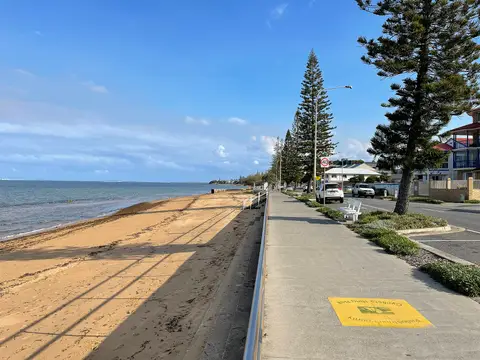 Margate Beach Margate
Margate Beach runs the full length of Margate Parade on the Redcliffe Peninsula.
Not patrolled · All-abilities access
-
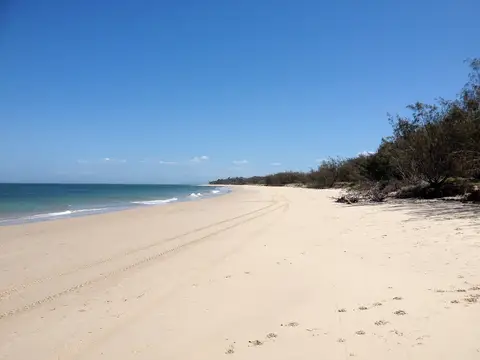 Woorim Beach Woorim
Woorim Beach on the ocean side of Bribie Island is one of City of Moreton Bay's 2 patrolled beaches.
Patrolled September school holidays to Labour Day in May · All-abilities access
-
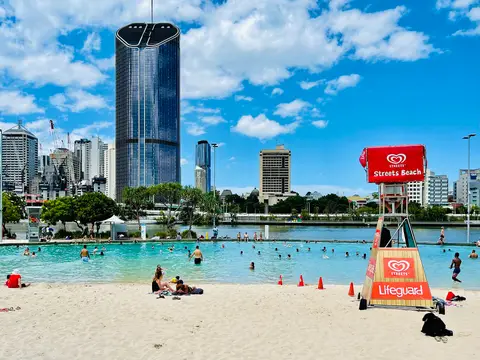 Streets Beach South Brisbane
Streets Beach in South Bank Parklands is a free, man-made swimming lagoon with white-sand beaches, palm trees, pebbled creeks and shady shallows, overlooking the…
Patrolled
-
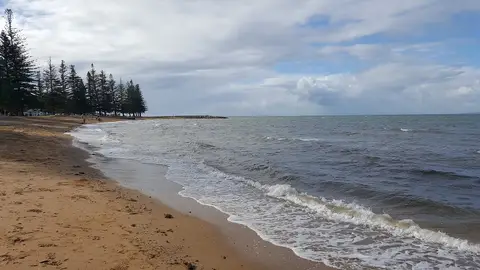 Scarborough Beach Scarborough
Scarborough Beach is a Moreton Bay beach on the Redcliffe Peninsula beside Scarborough Beach Park, with views of Moreton Island.
Not patrolled
-
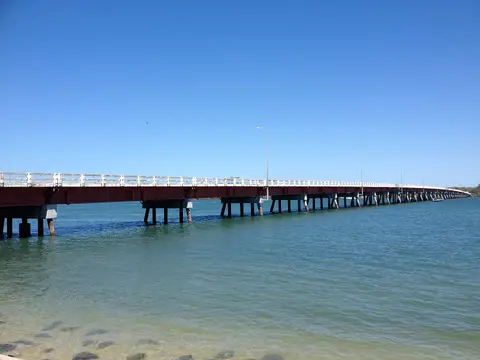 Sylvan Beach Bellara
Sylvan Beach lines the Bellara foreshore on the Pumicestone Passage side of Bribie Island, along Sylvan Beach Esplanade from the Bribie Island Bridge to Sunset Park.
Not patrolled
-
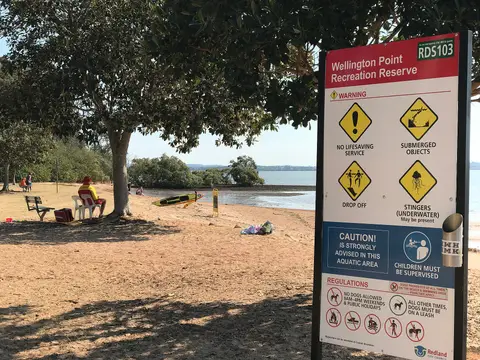 Wellington Point Recreation Reserve beach Wellington Point
The beach at Wellington Point Recreation Reserve is described by Redland City Council as one of its most loved beaches on the Redlands Coast.
Patrolled September – April · All-abilities access
-
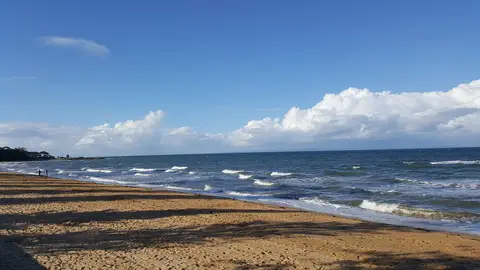 Suttons Beach Redcliffe
Suttons Beach on the Redcliffe Peninsula is one of City of Moreton Bay's 2 patrolled beaches.
Patrolled Mid-September to Labour Day in May · All-abilities access
-
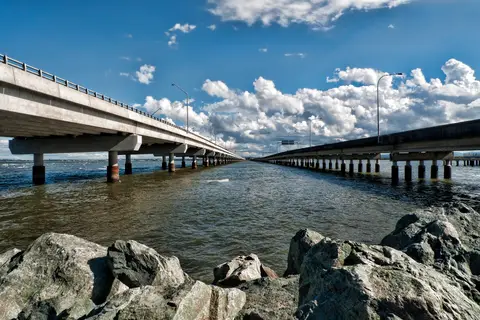 Clontarf Beach Clontarf
Clontarf Beach faces Moreton Bay beside Clontarf Beach Park on Hornibrook Esplanade.
Not patrolled
-
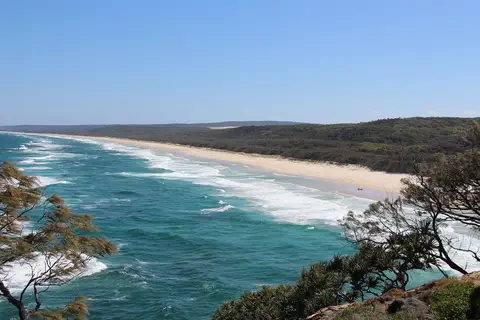 Main Beach, Point Lookout Point Lookout
Main Beach runs from Point Lookout to the southern tip of Minjerribah (North Stradbroke Island).
Patrolled September school holidays to first weekend in May
-
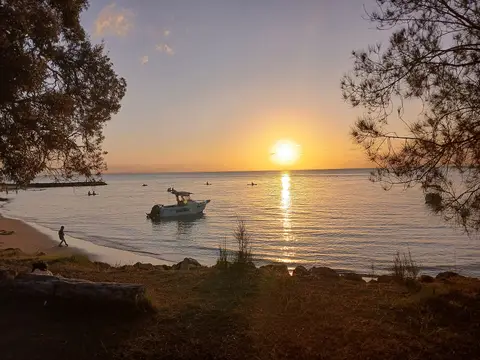 Amity Point swimming enclosure Amity Point
Amity Point on Minjerribah (North Stradbroke Island) has a council swimming enclosure at Cabarita Park, Claytons Road.
Not patrolled
-
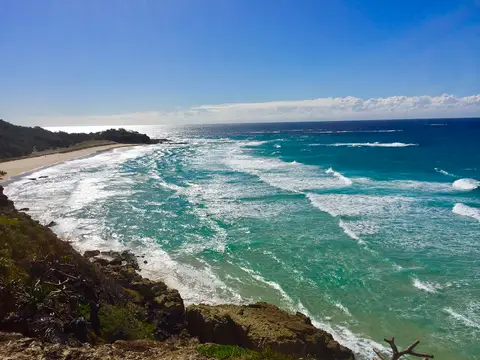 Cylinder Beach Point Lookout
Cylinder Beach at Point Lookout on Minjerribah (North Stradbroke Island) is described by Queensland Parks and Wildlife Service as a very popular, sheltered beach with a…
Questions parents ask
- Is Streets Beach really free?
- Yes, the lagoon at South Bank is free to use. It is popular, so go early in warm weather, and expect crowds on weekends. Check the listing for facilities and any closures.
- Which Brisbane beach is best for toddlers?
- Calm lagoons and swimming enclosures, such as Streets Beach, Settlement Cove Lagoon and Amity Point, give shallow water. Stay at arm's reach, and check the listing for facilities and supervision.
- Do the tides matter at Moreton Bay beaches?
- Yes, a lot. At low tide the water can retreat far from the sand, and at high tide there may be little beach. Check a tide chart or the listing before you drive, so the children are not disappointed.
- What should we do about jellyfish at Brisbane beaches?
- Read the signs and ask a lifeguard. Bluebottles and other jellyfish can appear in warmer months. If a child is stung, rinse and get help from a lifeguard or a first-aider. Lagoons and enclosures are safer for small children.
Other kinds of free day in Brisbane
- All free things to do with kids in Brisbane
- Waterfalls, lookouts and national parks
- Free water play and splash pads
- Free playgrounds worth the drive
- Free skate parks and bike tracks
- Chilled days: gardens, parklands and picnics
- Rain-safe: free museums, galleries and libraries
- Free things to do with toddlers
- Free things to do with teenagers